

+971 55 2022455





Exhibition Stand Design Tips to Increase Visitor Engagement
Share
Posted On: May 18, 2026
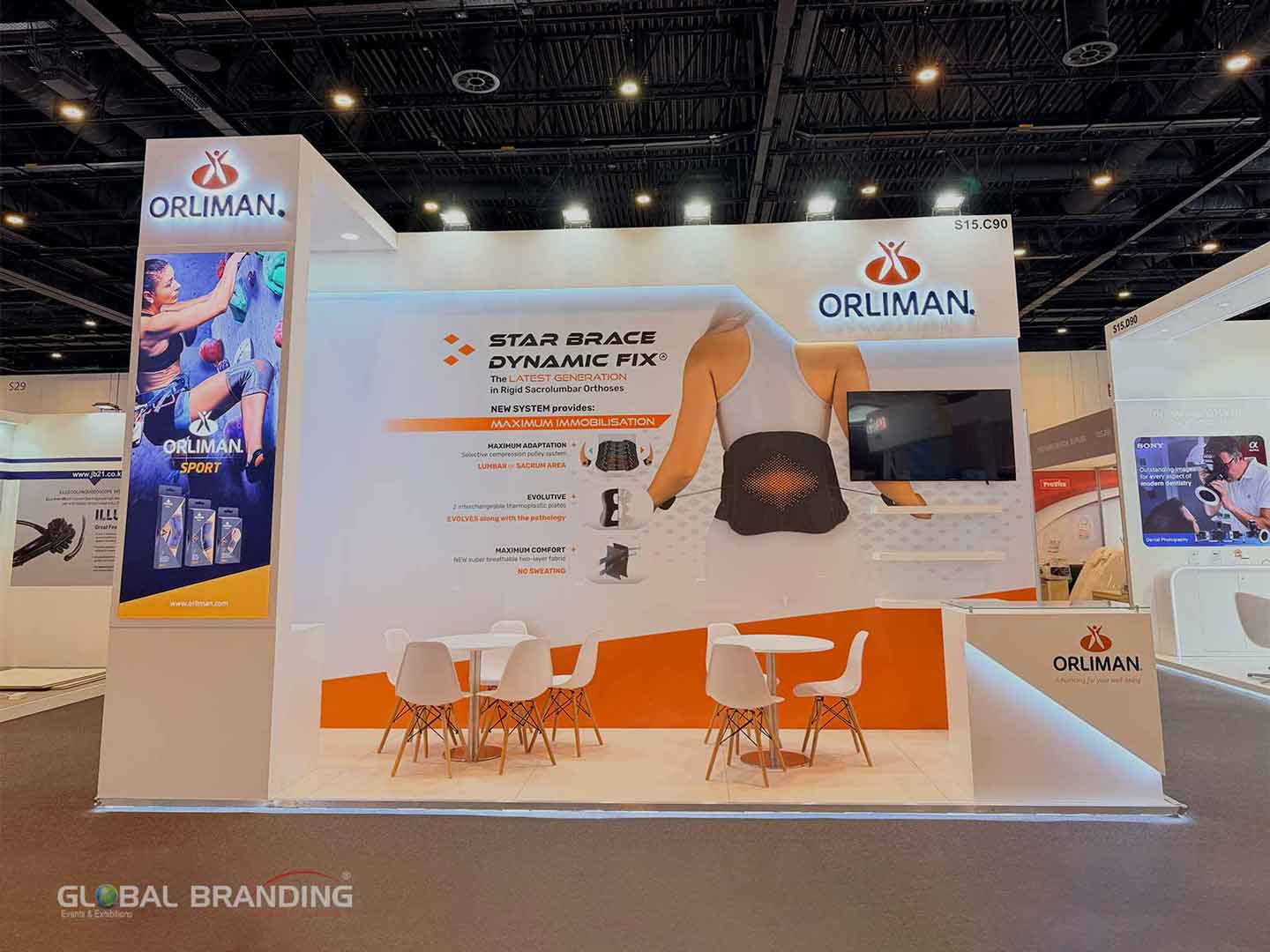
Trade shows are busy environments. Visitors move quickly, compare dozens of brands and often decide within seconds whether an exhibition stand is worth exploring.
That means a successful stand cannot simply look attractive. It needs to make people stop, understand your message, enter comfortably, interact with your team and take a clear next step.
In 2026, effective exhibition stand design is increasingly focused on the complete visitor journey — from first sight to product interaction, lead capture and follow-up.
Whether you are exhibiting at a major Dubai trade show, an international expo or a specialist industry event, these 12 exhibition stand design tips will help you create a space that attracts attention while supporting measurable business results.
If you are starting the project from the beginning, our step-by-step exhibition stand planning guide explains the complete process from concept and budgeting to fabrication and installation.
Why Visitor Engagement Matters in Exhibition Stand Design
Foot traffic alone does not make an exhibition successful.
A busy stand can still produce disappointing results when visitors leave without understanding the offer, speaking with the team or sharing their contact details.
Good exhibition stand design should support several stages of engagement:
Attention → Entry → Exploration → Interaction → Conversation → Lead Capture → Follow-up
When each stage is planned intentionally, the stand becomes more than a branded structure. It becomes part of the sales and marketing process.
A strong visitor experience can help your business improve brand recall, increase meaningful conversations, generate qualified leads, encourage product demonstrations and create additional social media exposure.
The key is to design around visitor behaviour, rather than trying to fill every available square metre.
1. Start With a Clear and Measurable Exhibition Goal
Before choosing colours, furniture, screens or stand features, decide what the exhibition needs to achieve.
A stand designed for a product launch should not necessarily have the same layout as one designed primarily for distributor meetings.
Your main objective may be to:
- Generate qualified sales leads
- Launch a new product
- Book appointments
- Meet distributors or investors
- Demonstrate equipment
- Increase awareness of a new brand
- Collect product enquiries
- Build relationships with existing clients
Try to connect the objective with something measurable.
Instead of:
“We want more awareness.”
Use:
“We want to generate 150 qualified visitor conversations and book 25 post-event meetings.”
Once the target is clear, decisions about exhibition stand size, technology, staffing and layout become much easier.
2. Design the Stand Around Visitor Flow
One of the most important exhibition stand design tips is also one of the most overlooked: plan where people will actually walk.
Visitors should not need to work out how to enter your stand.
Avoid placing large reception counters, furniture or display structures directly across the entrance. Instead, create an obvious route that naturally takes a visitor from the aisle to your main attraction.
A simple visitor journey could look like this:
EXHIBITION AISLE
       ↓
[ BRAND / MESSAGE ]
       ↓
[ OPEN ENTRANCE ]
       ↓
[ PRODUCT / DEMO ]
       ↓
[ STAFF CONVERSATION ]
       ↓
[ QR / LEAD CAPTURE ]
       ↓
[ MEETING OR EXIT ]
Notice that lead capture comes after engagement, not immediately at the entrance.
Someone who understands your offer and has already interacted with your team is usually more willing to continue the conversation than a visitor approached with a form the moment they enter.
For more detailed space-planning guidance, see our exhibition stand size and layout guide.
3. Match the Layout to Your Stand Type
There is no single exhibition stand layout that works for every location.
The number of open sides changes how people discover and move through your booth.
Inline Stand
An inline stand normally has one open side.
A practical visitor flow might be:
AISLE
────────────────────

      ↓ ENTRY

[Display]   [Reception]

       [Demo]

   [Meeting Area]

[Storage / Back Wall]
The focus should be strong front-facing branding and an entrance that remains visually open.
Corner Stand
A corner stand has two open sides, giving visitors more than one approach.
AISLE
────────────────────
      ↓        ↓
   ENTRY     ENTRY

 [Display] [Demo]

    [Conversation]

 [Storage / Meeting]
────────────────────
AISLE
Use both open sides rather than unintentionally blocking one with furniture.
Island Stand
An island stand can be approached from multiple directions.
          ENTRY
            ↓
      ┌────────────┐
ENTRY →  FEATURE   ← ENTRY
      │   ZONE     │
      │ Demo/Brand │
      └────────────┘
            ↑
          ENTRY
The branding and visitor journey need to make sense from every major aisle.
Before finalising the layout, check the venue floor plan, neighbouring stands, entrances and main visitor routes.
4. Make Your Brand Understandable From the Aisle
Visitors should be able to answer three questions almost immediately:
Who are you?
What do you offer?
Why should I stop?
Your logo alone cannot answer all three.
Use a clear visual hierarchy:
Brand → Main Benefit → Product or Service → Call to Action
For example, instead of covering a wall with several paragraphs, use one strong statement communicating the value of your offer.
Large graphics need to remain readable from realistic viewing distances, especially in busy halls where other stands compete for attention.
Keep important headlines away from areas that may later be blocked by:
- Visitors
- Reception counters
- TV screens
- Furniture
- Product displays
- Staff
Your branding should work from the aisle first and at close range second.
5. Use High-Quality Exhibition Graphics
Poor-quality printing can weaken an otherwise premium exhibition stand.
Blurry images, inconsistent colours, stretched logos and excessive text can quickly affect how visitors perceive the brand.
Professional exhibition graphics should use:
- High-resolution artwork
- Correct print dimensions
- Consistent brand colours
- Readable typography
- Strong contrast
- Simple visual hierarchy
- Professionally prepared logos
Do not try to communicate every feature of your business on the walls.
Your stand graphics should create interest. Detailed information can be delivered through conversations, brochures, QR codes, digital screens or product demonstrations.
For large-format graphics, signage and branded display requirements, explore Global Brandings’ Graphic Printing & Logos services.
6. Use Lighting to Create Visual Priority
Lighting is not simply decoration.
It helps decide where people look.
Use lighting to create a clear hierarchy between the general environment and the most important areas of the exhibition stand.
For example:
Ambient lighting can create a comfortable overall environment.
Spotlights can emphasise products.
Backlit graphics can strengthen brand visibility.
LED accents can highlight architectural features.
Display lighting can improve the presentation of products or materials.
The main mistake to avoid is using every lighting effect at the same intensity.
If every wall, counter and feature competes for attention, nothing becomes the focal point.
Instead, ask:
What should a visitor notice first?
Then use lighting to support that decision.
7. Give Visitors Something to Do
Passive stands depend heavily on staff members starting every conversation.
Interactive exhibition stands give visitors another reason to stop.
Depending on the product and target audience, engagement features could include product demonstrations, touchscreen selectors, interactive catalogues, short presentations, digital product comparisons, QR-led experiences, games, live demonstrations or immersive technology.
The important rule for 2026 is simple:
Technology should solve a communication problem, not become the attraction for no reason.
For example, a machinery manufacturer might use an interactive screen to show equipment that cannot physically be transported to the exhibition.
An architectural company could allow visitors to explore a development digitally.
A manufacturer could demonstrate how a product works internally through animation.
A technology business may use a touchscreen to let visitors choose an industry and instantly see the relevant solution.
Interactive features work best when they help visitors understand the offer faster.
8. Use AR and VR Where They Add Real Value
AR and VR can create memorable exhibition experiences, but they need a clear purpose.
Virtual reality may be useful when the actual product or environment is too large, expensive or impractical to bring to the event.
Augmented reality can help visitors explore additional information while still interacting with the physical exhibition space.
Possible uses include:
- Virtual factory tours
- Property walkthroughs
- Equipment simulations
- Product configuration
- Training demonstrations
- Interactive technical models
- Immersive brand storytelling
However, an immersive experience that takes several minutes can also create queues and block visitor circulation.
Plan the area carefully.
A simple AR/VR flow might look like:
AISLE
  ↓
[Preview Screen]
  ↓
[AR / VR Experience]
  ↓
[Staff Discussion]
  ↓
[Lead Capture]
The preview screen can help people understand the experience before joining it, while the conversation area allows staff to continue engagement afterwards.
For deeper guidance, read our article on the role of AR and VR in exhibition stand design.
9. Make Lead Capture Fast and Natural
A beautiful stand that produces no usable leads is difficult to justify commercially.
Your lead-capture process should be planned before the exhibition begins.
Depending on the event, you may use:
- QR-code forms
- Badge scanners
- Tablet forms
- CRM-connected lead systems
- Appointment booking
- Business-card scanning
- Product enquiry forms
Avoid collecting information that your sales team does not actually need.
A short qualified lead form may ask for:
Name + company + email + interest + next action
That can be more useful than a long generic form that visitors abandon.
Where possible, add simple qualification fields so your post-event team understands why each person visited.
For example:
Interested in: Product A / Product B / Distribution / Meeting / Quotation
That information makes post-event follow-up more relevant.
10. Design for Comfort and Accessibility
Visitor engagement drops quickly when the stand feels difficult to enter or uncomfortable to use.
Comfort does not mean filling the booth with sofas.
It means removing unnecessary friction.
Consider:
- Clear entrances
- Adequate circulation space
- Accessible counters
- Appropriate seating
- Safe cable management
- Readable displays
- Comfortable lighting
- Sensible audio levels
- Meeting areas away from heavy aisle traffic
- Concealed storage
If you have scheduled meetings, a semi-private or private discussion area may be useful.
For quick lead generation, however, too many enclosed rooms can reduce usable open space.
Balance the layout with the actual purpose of the event.
Open space should not be seen as wasted exhibition space. It helps people enter, move, explore and leave comfortably.
11. Position and Train Staff for Better Engagement
Exhibition staff are part of the stand design.
Even a perfectly designed entrance can feel closed if three team members stand across it having a conversation.
Avoid positioning staff directly in the visitor pathway.
Instead, assign simple roles.
One person may welcome visitors.
Another can handle demonstrations.
A product specialist can answer detailed questions.
Senior team members can manage qualified meetings.
A lead coordinator can ensure contact details and next actions are recorded correctly.
Visitors should be approached naturally rather than immediately receiving a sales pitch.
A useful opening question may be:
“What brought you to the event today?”
or:
“Are you looking at solutions for a particular project?”
Questions create conversations. Long rehearsed pitches often stop them.
12. Create a Stand People Remember After the Exhibition
Visitor engagement should not end when someone leaves your stand.
Memorable exhibition stand ideas can extend your visibility beyond the venue.
Consider adding a visually distinctive feature visitors may want to photograph or share, such as:
- An unusual product display
- Branded photo area
- Creative installation
- Interactive screen
- Live demonstration
- Feature lighting
- Visually distinctive backdrop
Avoid creating a “social media wall” simply because it is fashionable.
It should still feel relevant to the business and overall stand concept.
More importantly, connect the physical stand with post-event communication.
Someone who scanned a QR code, attended a demonstration or requested a quotation should receive follow-up relevant to that interaction.
The complete visitor journey becomes:
SEE
 ↓
STOP
 ↓
ENTER
 ↓
EXPLORE
 ↓
INTERACT
 ↓
CONVERSE
 ↓
LEAD
 ↓
FOLLOW UP
That is a much stronger measurement framework than simply counting how many people passed the booth.
How to Measure Exhibition Stand Engagement
Visitor engagement should be tracked using indicators connected to your exhibition objective.
Useful metrics include:
| Metric | What It Tells You |
|---|---|
| Stand visitors | How many people entered or meaningfully approached |
| Visitor interactions | How many visitors engaged with staff, products or activities |
| Product demonstrations | Interest in a specific product or solution |
| QR scans | Response to digital calls to action |
| Qualified leads | Visitors matching your target customer profile |
| Meetings booked | Stronger commercial intent |
| Lead conversion rate | Percentage of engaged visitors becoming leads |
| Cost per lead | Exhibition investment relative to leads generated |
| Follow-up response rate | Quality and relevance of captured leads |
| Opportunities created | Commercial value generated after the exhibition |
Do not treat generic numbers as universal industry benchmarks.
A better approach is to establish your own baseline.
For example, imagine an exhibitor records:
800 meaningful visitors
240 product interactions
120 captured leads
40 qualified opportunities
12 meetings booked
The team can compare these numbers against future exhibitions and identify where performance improves or declines.
Example: Finding a Visitor-Flow Problem
Imagine your stand receives plenty of traffic but very few product demonstrations.
The problem may not be the product.
Observe where visitors stop.
You may discover that a large reception desk is creating a barrier between the aisle and demonstration zone.
Original layout:
AISLE
────────────────────

████ RECEPTION ████

      DEMO

     MEETING
Visitors see the counter before they see the experience.
A redesigned version might be:
AISLE
────────────────────

  OPEN      OPEN
  ENTRY     ENTRY

      DEMO

Reception    Display

     MEETING
The same stand size can behave very differently simply by changing the position of the counter.
This is why visitor-flow planning should happen before fabrication.
2026 Exhibition Stand Design Trends to Consider
Exhibition stand design in 2026 is becoming more focused on flexibility, measurable engagement and purposeful technology.
Flexible and Reusable Stand Systems
Companies attending multiple exhibitions increasingly need stand components that can adapt to different booth sizes and layouts.
Modular and hybrid systems can help retain consistent branding while allowing certain elements to be reused or reconfigured.
Smarter Digital Lead Capture
QR codes, appointment booking and connected lead-capture systems can reduce manual data entry and make post-event follow-up easier.
The technology should still remain simple for visitors.
Purposeful Interactive Technology
Large screens are no longer enough on their own.
Businesses are using interactive tools to explain complex products, customise demonstrations or provide information relevant to individual visitor needs.
More Inclusive Visitor Experiences
Accessibility should be part of the initial design process.
Entrance widths, counter heights, seating, floor changes, readability and circulation should all be considered before construction begins.
Better Measurement
Businesses increasingly need to understand whether exhibitions are creating genuine commercial value.
Design decisions should therefore support measurable actions such as demos, QR scans, booked meetings, qualified leads and follow-up opportunities.
Common Exhibition Stand Design Mistakes to Avoid
Some stands struggle with engagement despite strong visual design because practical details are overlooked.
Common problems include overcrowding the stand, blocking entrances with counters, using too much text, unclear messaging, poor staff positioning, inadequate storage, adding technology without a purpose, ignoring accessibility, creating difficult visitor circulation and failing to plan lead capture before the event.
A useful design review question is:
“What could prevent a visitor from taking the next step?”
Review the stand from the aisle, entrance, demonstration area and meeting space before approving the final design.
Why Custom Exhibition Stand Design Can Improve Engagement
Custom exhibition stands allow the physical environment to be planned around your specific products, audience and commercial objectives.
Instead of adapting your strategy to a pre-designed structure, the structure can be designed around the required visitor journey.
This can provide greater flexibility for:
- Product demonstrations
- Multiple visitor entry points
- Private meetings
- Digital installations
- Brand storytelling
- Lead-capture areas
- Storage
- Hospitality
- Accessibility
- High-impact graphics
The right solution will still depend on your budget, event schedule and frequency of exhibiting.
Before committing to any design direction, review previous projects and evaluate how different stand styles work in real exhibition environments. You can explore the Global Brandings exhibition stand portfolio for examples from exhibitions in Dubai and international markets.
Working With Exhibition Stand Builders in Dubai
Dubai hosts exhibitions across technology, healthcare, aviation, food, construction, energy, beauty, travel and many other industries.
Different venues and events may have their own rules covering construction heights, fire-rated materials, electrical systems, rigging, loading access, build schedules and dismantling.
An experienced exhibition stand contractor can help coordinate the practical elements of the project while translating the approved concept into a buildable structure.
When selecting an exhibition stand builder in Dubai, consider more than the initial visual concept.
Review the company’s ability to support:
Planning → Design → Technical Development → Fabrication → Graphics → Logistics → Installation → On-site Support → Dismantling
At Global Brandings, exhibition projects are developed with a focus on brand presentation, functionality and the visitor experience, with support for stand design, production and exhibition execution.
Final Thoughts
The best exhibition stands are not necessarily the ones with the most screens, furniture or decorative features.
They are the ones that make the visitor journey easy.
People should be able to notice the stand, understand the offer, enter comfortably, explore something relevant, speak with the right person and take a clear next step.
Start with measurable objectives. Protect open space. Build a clear visitor flow. Use technology where it improves the experience. Make lead capture simple. Train the team. Then measure what happened.
Those principles can turn exhibition stand design from a visual expense into a more accountable part of your event marketing strategy.
If you are planning an upcoming exhibition in Dubai, the UAE or another international market, work with experienced exhibition stand builders who can connect your brand objectives with practical design, fabrication and visitor-flow planning.
Frequently Asked Questions About Exhibition Stand Design
Q. What makes an exhibition stand engaging?
An engaging exhibition stand has clear branding, an open entrance, a strong focal point and something relevant for visitors to interact with. The layout should make it easy to progress from initial interest to a conversation, demonstration or lead-capture action.
Q. How can I attract more visitors to my exhibition stand?
Improve visibility from the aisle, communicate one clear benefit, keep entrances open, use strong lighting and give visitors a reason to stop. Product demonstrations, interactive displays and knowledgeable staff can help turn attention into meaningful engagement.
Q. What is the best layout for an exhibition stand?
There is no universal best layout. The correct design depends on stand size, number of open sides, products, visitor volume and exhibition objectives. A lead-generation booth may need more open space, while a meeting-focused stand may require private discussion areas.
Q. How much open space should an exhibition stand have?
There is no percentage that works for every booth. Allocate circulation space first and then add essential functional zones. Visitors should be able to enter, explore products, speak with staff and leave without creating congestion.
Q. How do you improve visitor flow in a trade show booth?
Keep the entrance clear, position the main attraction where it can be seen from the aisle, remove unnecessary furniture and create a logical path between displays, demonstrations, conversations and lead capture.
Q. Are AR and VR worth using at exhibitions?
They can be valuable when they make a product, environment or service easier to understand. They are particularly useful for large equipment, property, complex products and experiences that cannot easily be recreated physically. Technology should support the exhibition objective rather than being included purely for novelty.
Q. How can exhibition engagement be measured?
Track metrics such as visitor interactions, product demonstrations, QR scans, qualified leads, booked meetings, cost per lead, post-event response rate and opportunities created. Choose metrics based on the original exhibition objective.
Q. How early should an exhibition stand be planned?
Planning should begin as early as practical, particularly for large custom stands. The project may need time for objectives, budgeting, design concepts, technical drawings, venue approval, artwork, fabrication, logistics, installation planning and staff preparation.
Q. What should I ask an exhibition stand builder before hiring them?
Ask about their design and fabrication capabilities, previous exhibition work, project-management process, venue experience, what the quotation includes, installation and dismantling support, graphics production, technical coordination and how changes are managed before the event.
Q. Why are professional graphics important for exhibition stands?
Graphics influence first impressions and help visitors understand the brand quickly. High-resolution images, readable typography, correct brand colours and simple messaging usually create a stronger professional presentation than walls filled with small text
Tell us about your Requirement
Exhibition Stand Builder in Riyadh, Saudi Arabia: The Complete 2026 Guide
22/08/2026
Riyadh has become the beating heart of trade shows, B2B exhibitions, and corporate events in the Middle East. From the Riyadh International Convention & Exhibition Center (RICEC) to Malham International Exhibition & Convention Center, brands from every industry now compete for attention on the show floor. Choosing the right exhibition stand builder in Riyadh is no longer a “nice to
Read More
